

Episode 13 Summary:
Beyond the Prompt: Why Your Strategy Starts with “Who” (And Why AI Can’t Save a Boring Brand)
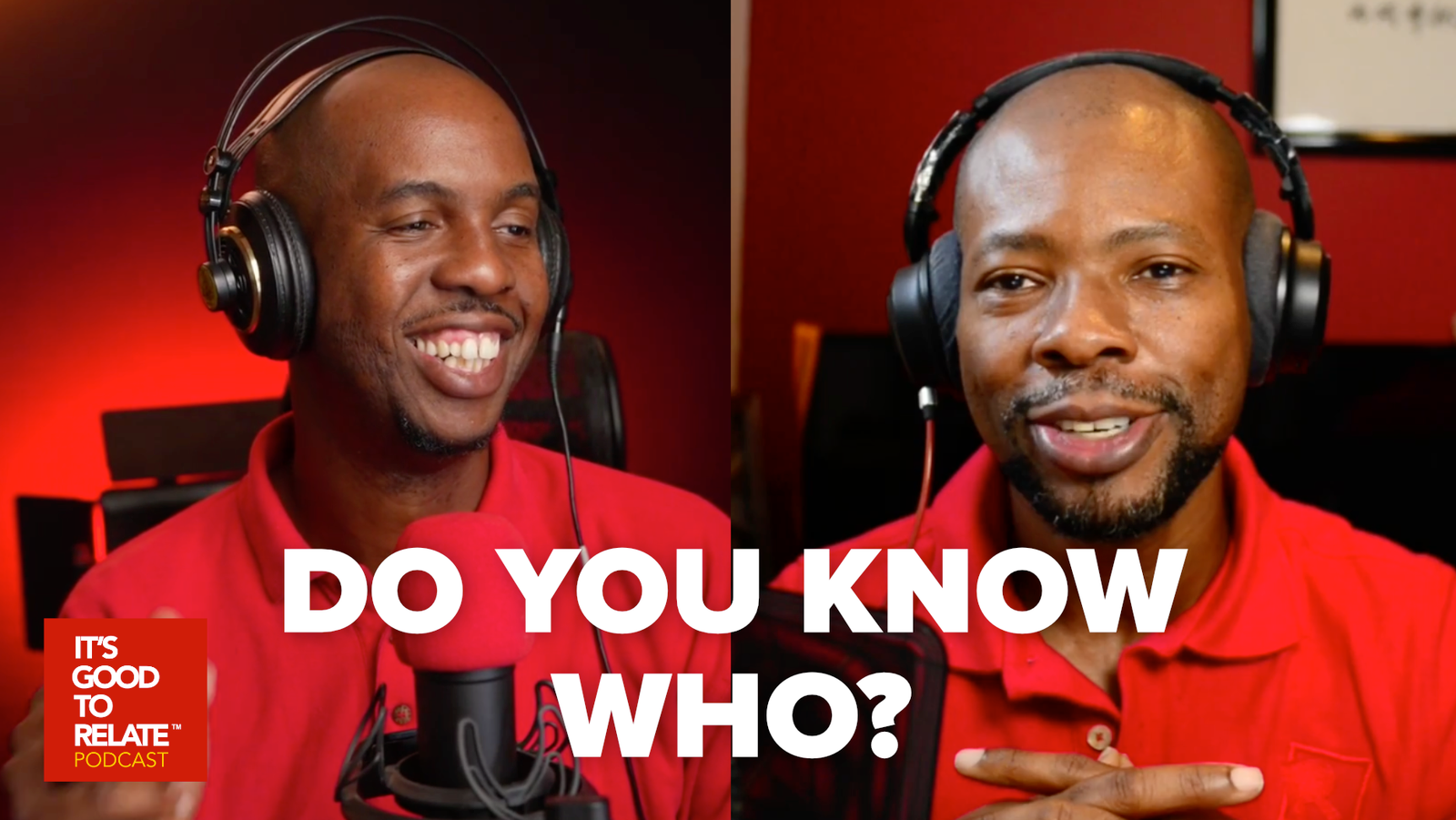
In the world of business growth, everyone is looking for the “secret sauce.” Is it the latest AI prompting technique? Is it posting at 3:00 AM on a Tuesday? According to Juma Bannister and Ayinde Smith, the secret isn’t a hack, it’s an identity.
If you’ve ever looked at your company’s content and felt it was a bit… vanilla, you aren’t alone. In the latest discussion on the It’s Good to Relate podcast, Juma and Ayinde broke down the anatomy of a content strategy that actually works. Spoiler alert: it doesn’t start with a ChatGPT prompt. It starts with a mirror.
What is a Content Strategy, Really?
Before you can execute, you have to define the mission. Juma provides a definition that every CEO should pin to their office wall:
“A content strategy is a clear plan for creating, organizing, and distributing your content, and it’s designed to build and maintain the long-term customer relationships while achieving your business goals.” — Juma Bannister
It’s not just “posting on LinkedIn.” It’s a roadmap for long-term relational equity. As Ayinde notes, this has to be rooted in the market from day one:
“Market orientation literally means, if you say you’re doing marketing, it literally means starting with your potential market. Who is likely to buy this product?” — Ayinde Smith
The Six Pillars of Strategy
If you are building your strategy from scratch, there are six questions you must answer. If you can’t answer these, your content is just noise:
- Who: The identity of the brand and the customer.
- Why: The expected outcomes and goals.
- What: The major themes and points of view.
- Where: Distribution channels (where does your “exact customer” hang out?).
- How: The packaging (video, text, podcast, AI experimentation).
- When: Frequency and discipline (less about “best times” and more about internal consistency).
The “Two Whos” Rule
Juma introduces a concept that most marketers skip: The internal “Who” must precede the external “Who.” > “The truth about that is that you never really get to discover your ideal customer until you clarify who you are first… if you don’t know who you are, then you will not be able to tell what business out there fits you.” — Juma Bannister
To define “Who Am I,” Juma suggests four non-negotiable components:
- Expertise: What do you actually do? (And no, you can’t be specialized in 12 different things. As Juma jokes, “Specialization means it’s not common.”)
- Values: The principles you are unwilling to compromise on.
- Story: Not a dry history lesson, but a relatable arc of how you solved a specific struggle.
- Point of View: Your unique stance. As Juma puts it, it’s taking someone from the low ground up to your mountain peak and saying, “Look out and see what I see.”
The AI Trap: Returning to “Square One”
In a world where everyone can generate a flyer or a blog post in ten seconds, the “mean” has become incredibly average. AI is making content vanilla. Ayinde argues that the only way to survive the “AI soup” is a distinct voice:
“Brands will have to create content with a clear point of view that distinguishes them from the soup and distinguishes them from what everyone else is saying.” — Ayinde Smith
Juma takes it a step further, suggesting that as AI becomes a commodity, we are heading for a Great Reset:
“Everything is gonna come back to zero… eventually all this will calm down. It will all calm down because all of the major companies are doing the same thing… When everybody has something, then nobody has anything, and it’ll all become normal after a while.” — Juma Bannister
When the “AI trick” is no longer impressive, all that’s left is your story, your expertise, and your positioning.
What did we learn today?
- Strategy is Plan + Relationship: It’s a roadmap to achieve business goals by building long-term trust.
- The Identity Priority: You cannot find your “Exact Customer” until you have defined your own Expertise, Values, Story, and Point of View.
- The Death of Vanilla: AI is driving the market toward a “mean” average. To stand out, you must double down on human differentiation and unique stances.
- Consistency > Timing: Posting times are “low on the totem pole.” Discipline and providing value to the right audience matter more than the algorithm’s clock.
The CEO Challenge: If you stripped away your logo and your AI-generated graphics, would your “Point of View” still be recognizable to your market?
Call to Action:
Which of the “Four Components of Who” (Expertise, Values, Story, or Point of View) is currently the weakest in your company’s content?