

Episode 1 Summary:
The “Bodyguard” Theory of Business: Why Relationships Trump Everything in the Creative Industry
Let’s be honest: most business partnerships start in a boardroom with a stack of legal papers and a stiff handshake. But for Juma Bannister and Ayinde Smith, the founders of Relate Studios, it started with a nighttime photography gig in Port of Spain that felt a little more like a security detail.
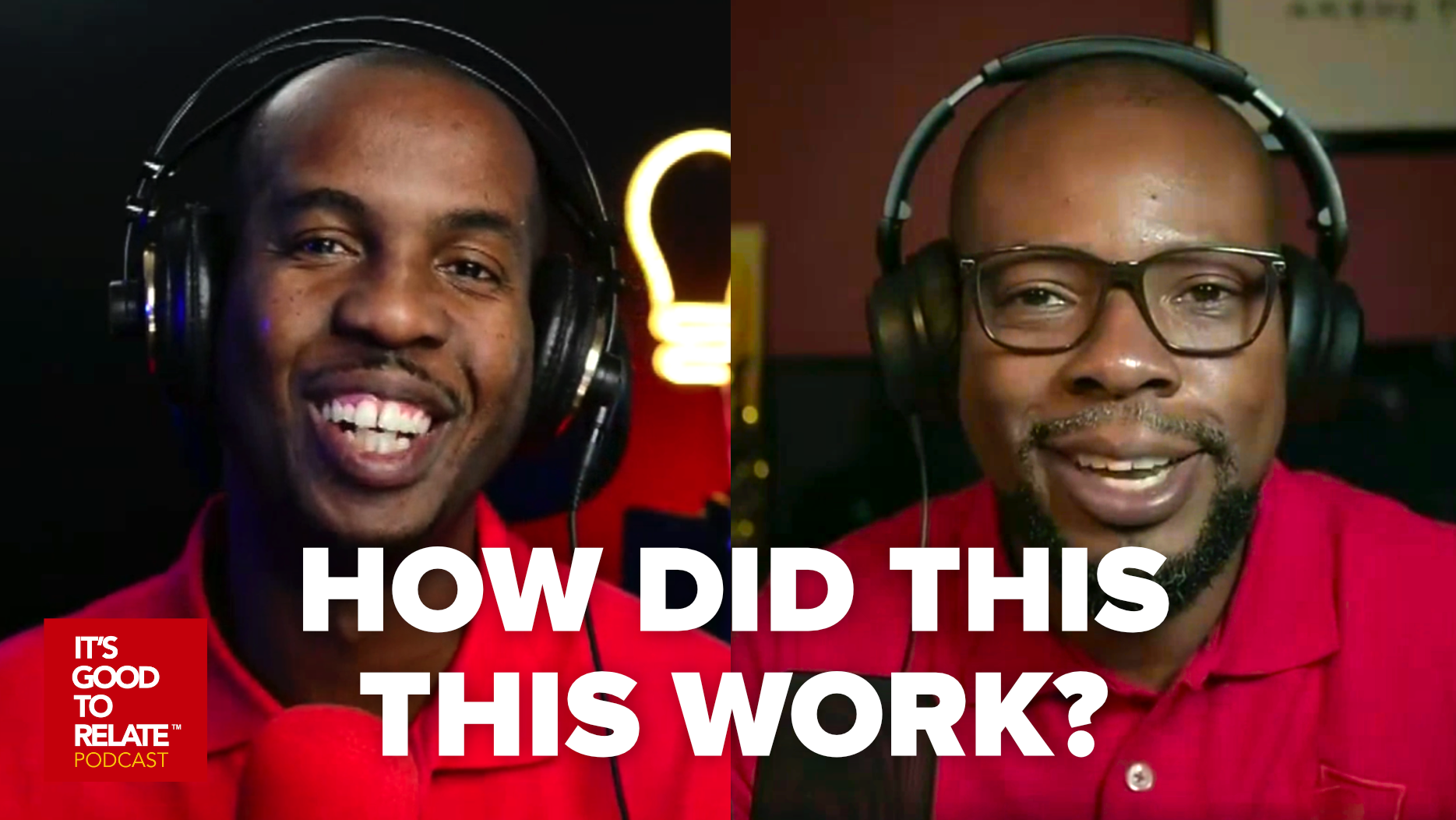
In the debut episode of the It’s Good to Relate podcast, Juma and Ayinde pull back the curtain on how two creative “purists” stopped looking down on weddings, survived the transition from 8-to-4s to full-time entrepreneurship, and built a partnership that has outlasted most startups.
From Pencils to Pixels: The Origin Stories
Every CEO has a “garage story.” For Juma and Ayinde, it was more about Bristol board and Kodak 110 cameras.
Juma was destined for the visual arts, roped into painting banners for his father before he could even drive. Ayinde, on the other hand, was busy “hacking” clip art at the YMCA to help his mother design flyers.
The Creative Path
| Feature | Juma Bannister | Ayinde Smith |
| First Tool | Pencil & Markers | Kodak 110 & Nikon FM |
| Foundation | Print & Lithography | Graphic Design & Photoshop |
| Philosophy | The Visionary/Action-oriented | The Measured/Collaborative |
Despite their shared interests, they didn’t start as a team. In fact, Ayinde admits he wasn’t exactly Juma’s biggest fan at first.
“I must say I was never really impressed because your camera, to me… your digital camera was a little bit janky, a little bit small and too silver… In my mind, photography was like this fine art… and I just kind of looked at him and was like, ‘that’s nice.’” — Ayinde Smith
The “Bodyguard” Incident and the Tobago Pivot
The partnership truly solidified when Ayinde asked Juma to accompany him on a shoot in Port of Spain at night. Juma’s interpretation? He was there for his “big, tall, intimidating” presence rather than his Shooting skill.
However, the real turning point came in 2010 when Juma twisted his ankle before a wedding in Tobago. He called Ayinde for backup. That trip didn’t just save the wedding; it killed the “purist” snobbery that often plagues creative professionals.
“In my mind, wedding photography also was at the bottom of the rung… I realized how creative you could actually be… how you could actually express yourself through the creation of photographs for somebody. I think I’ve now been cured of that delusion.” — Ayinde Smith
Juma saw an opportunity to do something different to move away from “boring” traditional weddings and toward a documentary style.
“I was a nobody. So nobody would listen to me saying those things… I had to kind of look outside of Trinidad and Tobago for inspiration. And that’s how the foundation of the style for Flowfoto, which eventually turned into Relate, got started.” — Juma Bannister
The CEO’s Dilemma: Vision vs. Committee
If you’re running a startup, you’ve likely been told that “collaboration is king.” Juma and Ayinde agree, but with a massive caveat: Vision is not a democracy.
One of the most profound segments of the discussion revolves around the “Duality of Leadership.” Ayinde makes a point that every founder should pin to their desk:
“A vision literally has to come from one person because anytime you add two people to the vision, you now have division (di-vision).” — Ayinde Smith
Why Their Partnership Works
-
Shared Values: They don’t just work together; they believe the same things.
-
Character Transformation: Juma notes that he had to change his personality to lead effectively.
-
Flexibility: Ayinde emphasizes that being “rigid and immovable” is the fastest way to kill a team.
-
Alignment: Juma sums it up perfectly: “With people with alignment comes momentum.”
What did we learn today?
-
Relationships > Skill: You can buy technical skill, but you can’t buy a partnership built on shared values.
-
The Purist Trap: Don’t look down on “commercial” work. Done right, it’s just as much of an art form as your passion projects.
-
One Vision, Many Hands: A business needs a single visionary leader to set the direction, but it needs a collaborative team to build the structure.
-
Flexibility is a Growth Metric: If you can’t adapt your personality to fit the needs of the business, you’ll hit a ceiling.