

Episode 2 Summary:
Why AI Ads Are Flooding the Market While Gen Z Buys Cassette Tapes (And What It Means for Your Brand)
Welcome to the weird, wild contradiction of modern consumerism. On one hand, we have generative AI churning out marketing campaigns at the speed of light. On the other, we have a massive, surging demand for “dumb phones,” physical CDs, and tactile car buttons.
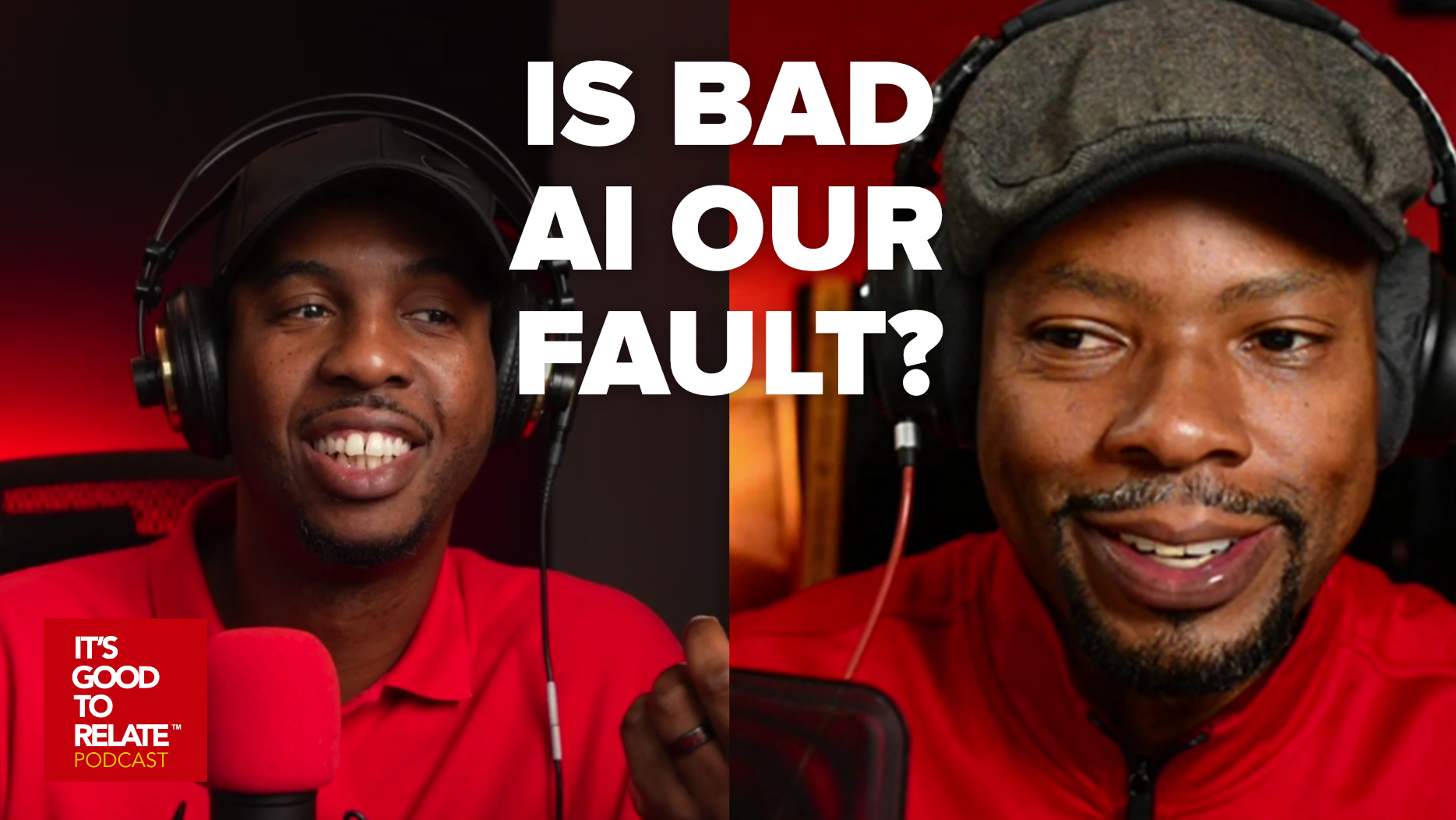
If you’re a startup founder or a marketing executive trying to figure out where the attention economy is heading, this paradox can feel maddening. But in a recent, highly insightful discussion between marketing experts Juma Bannister and Ayinde Smith, a unified theory emerged.
Whether you are pushing the envelope with AI or stripping things back with retro tech, the winning variable remains the same: Human Connection and Strategy.
Here is a breakdown of their discussion and what it means for the future of your brand’s content strategy.
The AI Ad Gold Rush (and Why Most of It is Garbage)
We are currently in the “wild west” phase of AI marketing. The barrier to entry is zero, which means the market is being flooded with what Juma calls “low-effort AI content.”
To illustrate how AI should be used, Juma highlighted a recent local Facebook ad for a laundry detergent called “Blue Wash.” The ad depicted a traditional Trinidadian stick-fighting match. But instead of drawing blood, the usual goal of the sport, one fighter was aggressively smelling the other fighter’s shirt because the laundry detergent smelled so good.
Was the ad perfect? No. A sharp eye could spot AI artifacts, like one fighter inexplicably holding two sticks. But the ad was a massive viral success anyway. Why?
“I think the reason it works is not so much because the AI was good. It works because the emotion is real.” – Juma Bannister
The AI wasn’t the star of the show; the idea was. The algorithm didn’t know the cultural context of Trinidadian stick fighting. A human strategist had to come up with that subversion of expectations.
The “Drone Shot” Phase of AI
Ayinde astutely pointed out that we’ve seen this exact tech cycle before. When commercial drones first hit the market, every video suddenly opened with a gratuitous, sweeping drone shot. When Photoshop introduced the “emboss” feature, every graphic designer slapped it onto every piece of text.
Right now, brands are doing the “emboss” equivalent with AI. They are using it just to use it. But as the novelty wears off, and as multi-billion dollar AI valuations face the reality of flatlining user retention, only the strategic thinkers will survive.
“Strategy will never die regardless of what tools people come with. So I think what we have to do as marketing communicators is really figure out how we can use AI… to make our strategy more responsive, quicker, stronger. But we can’t step away from the fact that we need to have strategy and just say, ‘Oh, let’s AI, AI to death.'” – Ayinde Smith
The Retro Tech Rebellion: Why “Dumb” is the New Smart
If the digital world is becoming an endless sea of cheap, AI-generated content and rented streaming media, how do consumers rebel? They go tactile.
Ayinde noted a fascinating trend: the aggressive return of retro tech. His 13-year-old daughter is asking for actual CD players. Audiophiles are paying premiums for custom-mixed cassette tapes mailed to their doors. Even automotive design, like Johnny Ive’s recent work with Ferrari, is abandoning the “everything is an iPad touchscreen” trend in favor of tactile, physical buttons.
Why are we reverting? It comes down to two psychological drivers:
1. The Illusion of Ownership vs. Actual Agency
We live in a subscription economy. You don’t own your Spotify library; you rent it. If you stop paying your $9.99 a month, your music disappears.
“There’s this psychological principle of people wanting to have agency and… if you try to take agency away from people, they will rebel. What the current systems for these type of things are doing is that basically they’re saying that you can’t own anything unless you pay me… I just think that that is part of the human mind that is rebelling against some of these things.” – Juma Bannister
2. Tangible Relationships with Brands
It is incredibly difficult to have a deep emotional relationship with a digital stream. Holding a physical product, seeing it on a shelf, and passing it down creates an anchor in the real world.
“Relationships sometimes go beyond your brand and go into how people experience your brand. And that would mean physical, tactile, touch things that they could remember, things that will touch them emotionally.” – Ayinde Smith
The Ultimate Takeaway for Your Business
So, how do you bridge the gap between high-tech AI efficiency and high-touch retro authenticity?
You stop treating tools as the savior.
“The tools could work when a good person is behind them using them… The gap is between your head and your hands… The people who cannot see and have been using the tool anyhow, eventually they will fall off. And the people who could actually see and get to learn to use the tools will be the ones who will do very well with them.” – Juma Bannister
Whether you are prompting ChatGPT for a localized ad campaign or designing a physical welcome kit for your SaaS clients, the technology is just the vehicle. The human imagination driving it is what converts.
What did we learn?:
-
AI is a Tool, Not a Strategy: The market is flooded with low-effort AI content. Successful campaigns (like the Blue Wash ad) win because of the human-driven emotional resonance and cultural context, not the flawless rendering of the AI.
-
The Tech Novelty Curve: Just like early drone photography or Photoshop filters, the novelty of AI will wear off. Brands must rely on foundational marketing strategies, not just the shiny new tool.
-
The Craving for Tactile Agency: The rise of physical media (vinyl, CDs, feature phones) is a direct rebellion against the subscription-based, algorithm-driven digital world. Consumers want to own things again.
-
Human Connection Wins: Whether interacting digitally or physically, customers crave authentic, emotionally resonant relationships with the brands they consume.
Over to you: In a world where your competitors can use AI to generate endless digital content for free, what is the one tangible, authentic thing your brand is doing to create a real, tactile relationship with your audience?