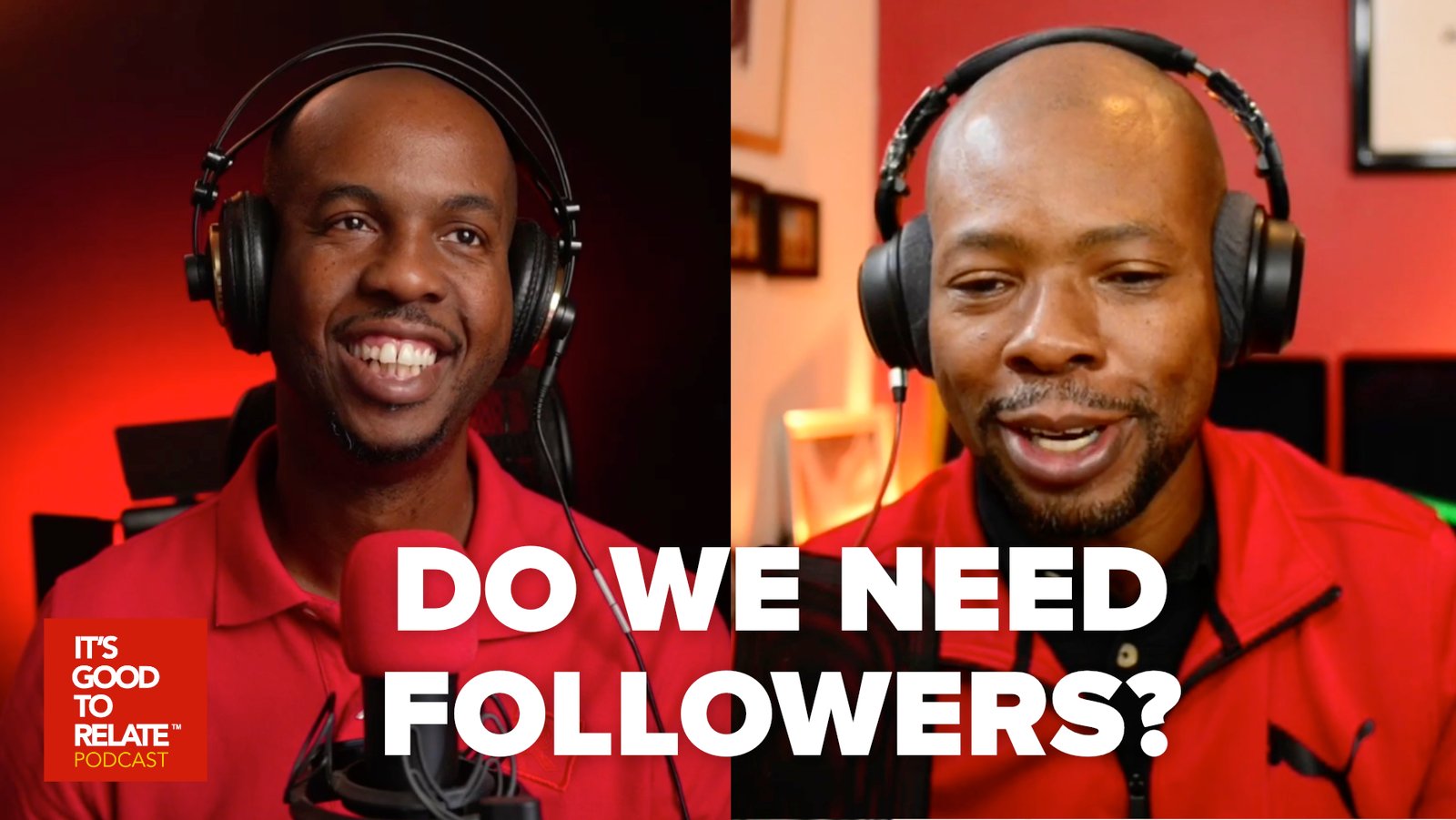


Episode 11 Summary:
Beyond Vanity Metrics: Turning Customer Stories and “Followers” into Revenue Engines
In the latest episode of IT’S GOOD TO RELATE Juma Bannister and Ayinde Smith peel back the curtain on two of the most misunderstood assets in modern business: customer testimonials and social media communities.
If you are a CEO or a founder, you likely have a folder full of “nice” reviews and a LinkedIn following that looks impressive on paper but feels hollow on the balance sheet. This discussion is the antidote to that “hollow” feeling. It’s time to move past participation trophies and start building a brand that actually sticks.
1. Stop Collecting Reviews, Start Documenting Transformations
Most B2B testimonials are, quite frankly, white space fillers. “John was great to work with” doesn’t close deals in 2026. Juma argues that for service-based businesses where the product is intangible, evidence is the only currency that matters.
“Stop collecting reviews and start documenting transformations… they’re frankly useless. ‘They were great to work with’ or ‘highly recommended’ are the participation trophies of the business world.” — Juma Bannister
To move from a generic “Good job!” to a high-conversion asset, Juma outlines the TBCT (Transformation-Based Customer Testimonial) framework. The goal is to capture a story arc, not a compliment.
The Three-Phase Structure of a Winning Testimonial:
- The Before: What were they struggling with? Did they try other solutions that failed? (This agitates the problem so prospective clients can see themselves in the struggle).
- The During: What was the actual experience of working with you? Were there specific “lightbulb moments”?
- The After: What specific metric or feeling changed?
As Juma puts it:
“A powerful testimonial is not about how nice you are, it’s about the emotional and practical journey… You want your prospective client to see themselves in the story.”
Pro Tip: Get it on video. Text is sanitized; video is raw, emotional, and carries the weight of truth that a text box simply cannot.
What to Ask, The 3-Phase Structure
Before – During – After.
Cover the entire story arc of the experience.
- Before
- What were you struggling with before you hired us / Company?
- Did you try other solutions?
- Why hadn’t other solutions worked?
- How did this problem affect your business/life?
- Why did you choose us / Company?
- During
- What was your experience working with us / Company like?
- Were there any specific moments that reinforced “this was the right decision?”
- After
- What specific thing has changed in your business/ life after working with us / Company?
- How do you feel about that?
- What impact has it had on other areas of your business / life?
- Would you recommend us / Company to others?
Extra Tips:
- Use open-ended questions (avoid yes/no)
- Follow-up with: “Can you tell me more about that?”
- Let them speak freely, then edit for clarity
- Repackage your testimonial in multiple formats (social posts, email, sales page)
2. Community vs. Followers: The Battle for Loyalty
Ayinde shifts the conversation to a hard truth: a million followers mean nothing if they aren’t a community. In an era of algorithm-driven “For You” pages, we are consuming content from strangers, not building relationships with brands.
“Community is like the essence of multi-person relationship… You want to build a tribe… not just people who will encounter your stuff because they’re scrolling, but people who will seek out your stuff.” — Ayinde Smith
Why Community is a CEO’s Best Friend:
- Lower CAC (Customer Acquisition Cost): A community is a self-sustaining referral engine.
- Self-Reinforcing Branding: When people identify with your community, they brand themselves. Think of the “Apple” effect—people didn’t just buy a computer; they bought into “Think Different.”
- Sustainable Sales: Community turns a transaction into a duty of participation.
Ayinde highlights that the most loyal community members do three things: they buy repeatedly, they talk about you, and they publicly associate with you.
“If you have to be chasing your purchases or ‘buying’ your purchases… you actually become less profitable and more susceptible to short-term shocks to your business.” — Ayinde Smith
Where to Build?
While LinkedIn is the professional standard, Ayinde and Juma suggest that for deep, intimate relationship building, WhatsApp is surprisingly the “gold standard” for direct engagement in many markets, followed by the “WIFTY” stack (WhatsApp, Instagram, Facebook, TikTok, YouTube).
What did we learn today?
- Evidence over Ego: Your clients don’t care how “nice” you are; they care that you can take them from Point A to Point B. Documentation of that change is your most powerful marketing tool.
- The “Why” Matters: When asking for a recommendation, always ask why. The answer will give you the exact language you need for your next marketing campaign.
- Values-Based Content: To build a community, you must have a point of view. You must stand for something and, occasionally, “meaningfully disagree” with the status quo.
- Consistency is the Bedrock: Community isn’t built in a viral moment; it’s built over 50 to 100 episodes of showing up exactly when you said you would.
The Bottom Line
Is your content strategy designed to drive fleeting traffic, or is it designed to build a resilient community?
Look at your last 10 posts: If they disappeared tomorrow, would your “followers” miss the information, or would your “community” miss the relationship?