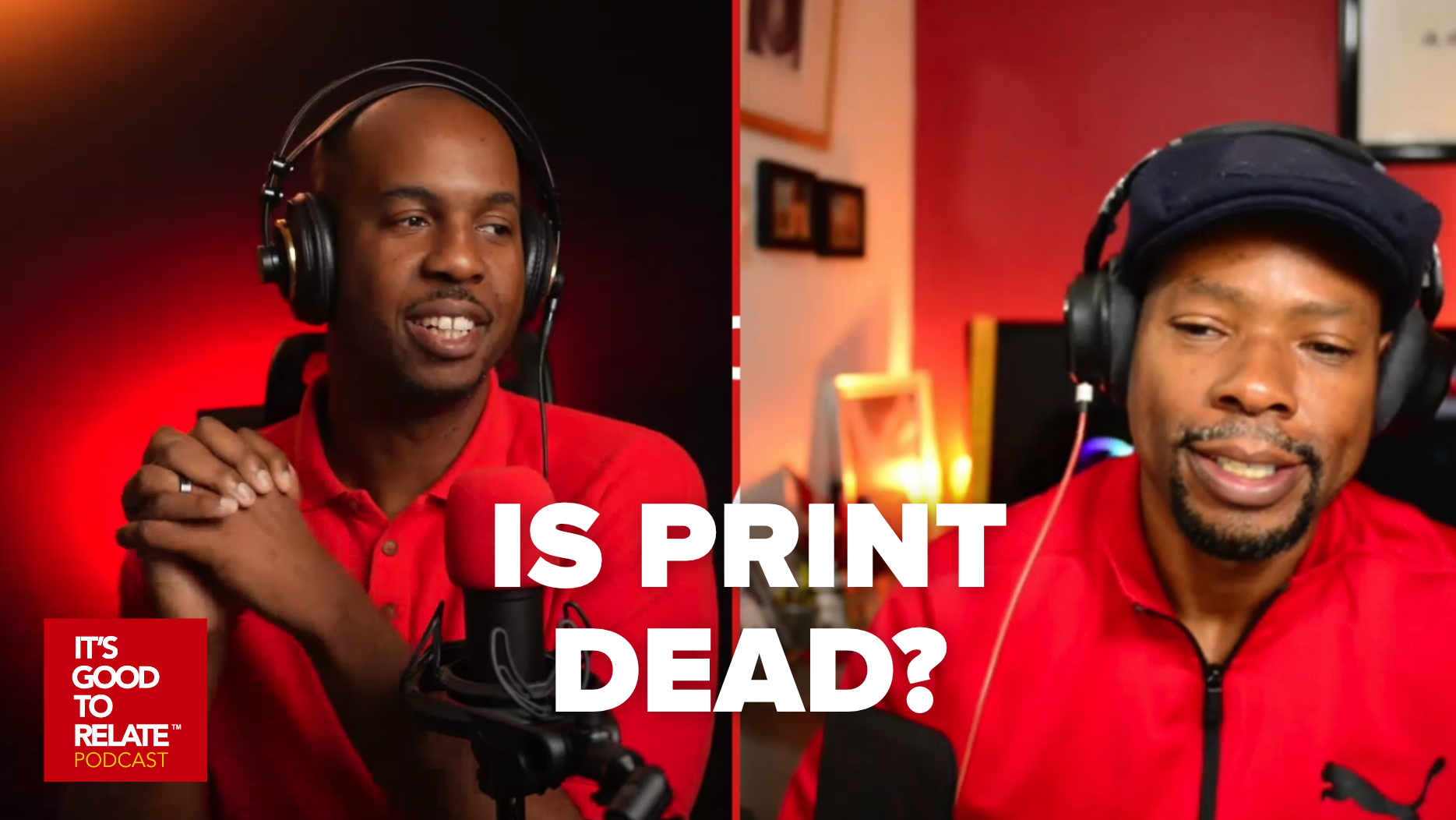


Episode 3 Summary:
Why “Hidden” CEOs Are Losing Trust & The Surprising Survival Lesson from Print Media
You can’t trust anyone these days. Especially social media content. Especially, especially social media content from a business…at least that’s how it feels.
The world is experiencing a massive deficit of trust. Consumers are skeptical of faceless corporations, and the digital world is flooded with AI-generated fluff and lightning-fast but often unverified hot takes.
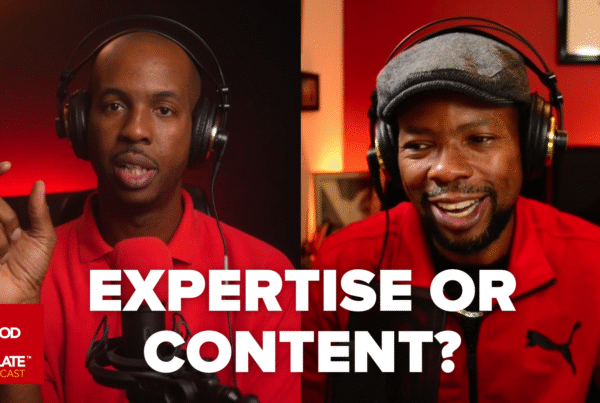
In a recent insightful discussion between content experts Juma Bannister and Ayinde Smith, two seemingly different topics collided to form a powerful lesson for modern leaders: The necessity of the CEO personal brand, and the evolution of traditional media.
If you are a startup CEO hiding behind corporate press releases, or if you think creating content is just for influencers, you might want to rethink your strategy. Here is why stepping out from behind the curtain is no longer optional.
The “Invisible CEO” Problem
It is incredibly common for busy executives to brush off content creation. The default excuse? “I don’t have the time.” But as Juma rightly points out, we make time for what we believe is important.
To test the waters, Juma did a quick audit of the CEOs leading some of the most profitable companies in Trinidad and Tobago (including major players like the National Gas Company and Angostura). The findings were stark: most of these leaders were essentially digital ghosts on LinkedIn. They had zero content, minimal connections, and no personal voice.
Conversely, James McLetchie, CEO of the Massy Group, stood out. By speaking at events like Tech Beach Retreat and actively sharing insights about how his company uses data, he isn’t just running a company; he is actively building credibility.
When leaders isolate themselves, they leave a dangerous void. Ayinde hit the nail on the head regarding crisis and public perception:
“In the gap of hearing somebody in authority speak, people started creating realities… What happens when there’s a gap left? People just fill it with all kinds of stuff. True or not, correct or not.” >
Ayinde Smith
Content is the New PR
Decades ago, PR meant kissing babies, cutting ribbons, and hiding behind a team of publicists. Today, content is the new PR. It is the direct line between a leader and their stakeholders.
-
It Humanizes the Brand: People don’t trust logos; they trust people. A CEO willing to attach their face and voice to a message instantly boosts believability.
-
It Controls the Narrative: You don’t need to call a press conference to set the record straight or share your vision. You can simply turn on your camera.
As Juma bluntly put it:
“Leaders can’t be hidden like they used to before… There’s some mysterious person behind the curtain, and I think the days of that is done. And for companies to be trusted… you’re definitely gonna have to have people coming out and saying things directly.”
Traditional Media Isn’t Dead: It’s Just Selling the Wrong Thing
The conversation then pivoted to the closure of Newsday, a major national newspaper in Trinidad and Tobago. For years, marketers have been declaring print media “dead.” And it’s true that newspapers suffer from a fatal flaw in the digital age: they are a day late. By the time the ink dries, social media has already chewed up and spit out the story.
However, traditional media possesses one massive asset that TikTokers and IG Content Creators desperately lack: Institutional Authority.
“Traditional media is selling truth. New media is selling speed.” >
Ayinde Smith
The Pivot Playbook for Print (and Startups)
So, how does an old-school medium survive? The exact same way a startup disrupts a legacy industry: by leaning into its unique advantages and adapting its delivery.
-
Leverage Built-in Trust: Traditional outlets should use their history of rigorous journalism to launch new, digital-first products (like video or hybrid media) that carry the weight of their trusted brand name.
-
Go Niche and Hyper-Local: The mass-market approach is failing, but hyper-focused, tangible collectibles (like high-quality niche magazines or localized news) are seeing a resurgence. In a world of digital fatigue, people are craving things they can actually hold.
-
Know Your Audience: Print isn’t dead if your target buyers are still reading it. Marketers must put their egos aside and go exactly where their audience’s attention lives.
What Did We Learn Today?
-
Trust is the ultimate currency: Whether you are a legacy newspaper or a tech startup, if people don’t trust you, your days are numbered.
-
CEOs must be the Communicator-in-Chief: Hiding behind a corporate logo is a massive risk. Building a personal brand via content humanizes your company, builds direct relationships with your audience, and prevents the public from “creating realities” in your absence.
-
Speed vs. Truth: New media wins on speed, but traditional media wins on truth. The brands that will dominate the future are the ones that figure out how to merge the two.
-
Adapt or Die: Print media must leverage its institutional authority into new digital formats and niche physical products to survive the transition.